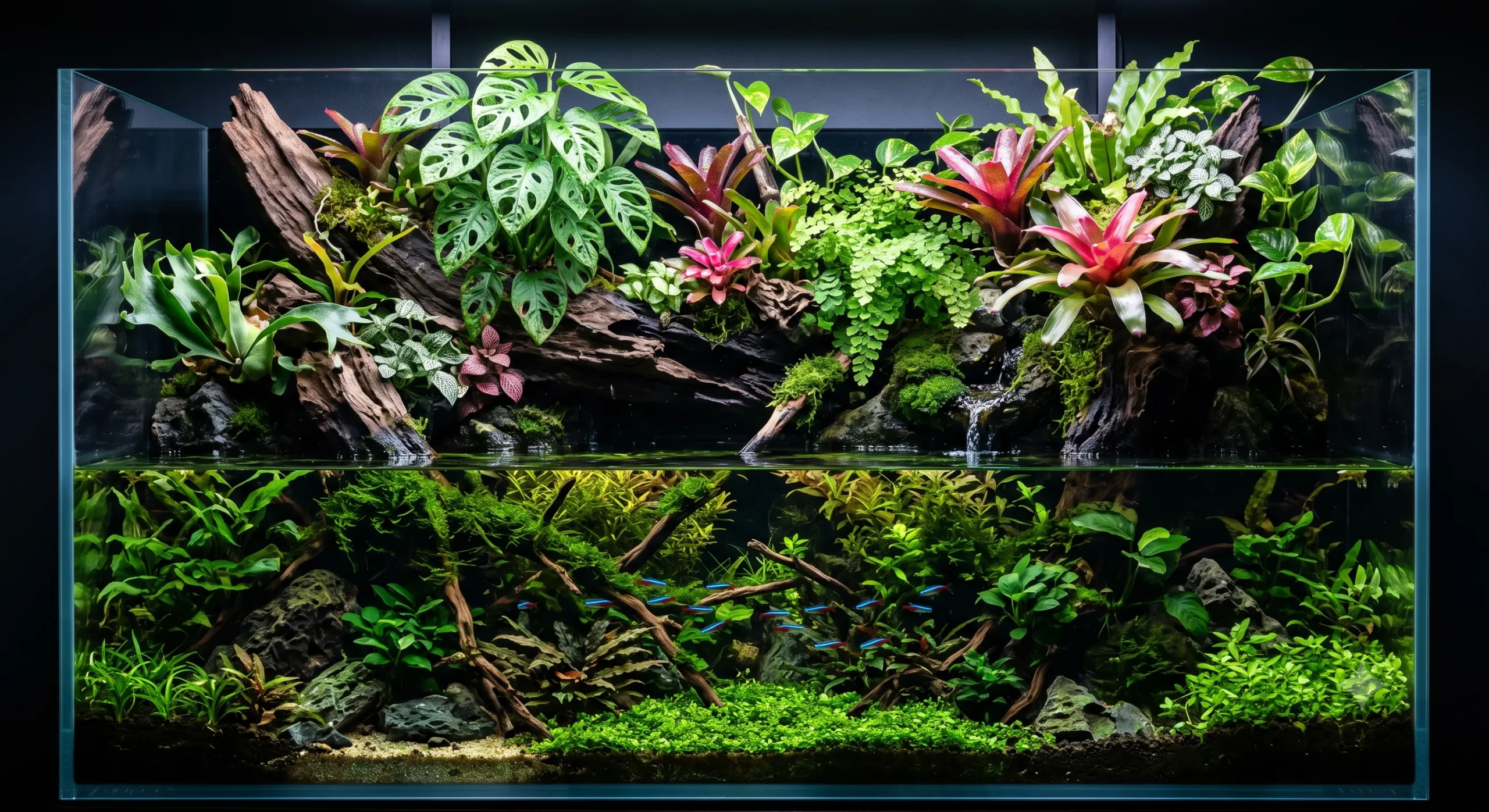
Walk into any pet store, and you’ll likely see tubes of plants labeled for aquariums. However, a significant portion of these are not true aquatic plants. Understanding the difference is crucial for a healthy ecosystem.
True Aquatic Plants True aquatics are species that have evolved to survive fully submerged underwater indefinitely. They have specialized structures that allow them to perform gas exchange and absorb nutrients directly from the water column. Examples include Anubias, Cryptocoryne, and Rotala. Even when these are grown “emersed” (above water) at commercial nurseries, they possess the genetic ability to shed those terrestrial leaves and grow new, submerged foliage.
Terrestrial and Marginal Plants Terrestrial plants cannot survive underwater. Marginal plants (like Peace Lilies or Pothos) thrive in bog-like conditions—they love having their roots completely submerged in nutrient-rich water, but their leaves must remain in the open air.
If you completely submerge a terrestrial or marginal plant (like the commonly mis-sold Aluminum Plant or lucky bamboo leaves), it will eventually drown, rot, and cause a massive ammonia spike in your tank. At Hobby Enclave, we highly encourage using marginal plants by hanging their roots in the back of the filter or tank rim—just keep those leaves dry!
Leave a Reply