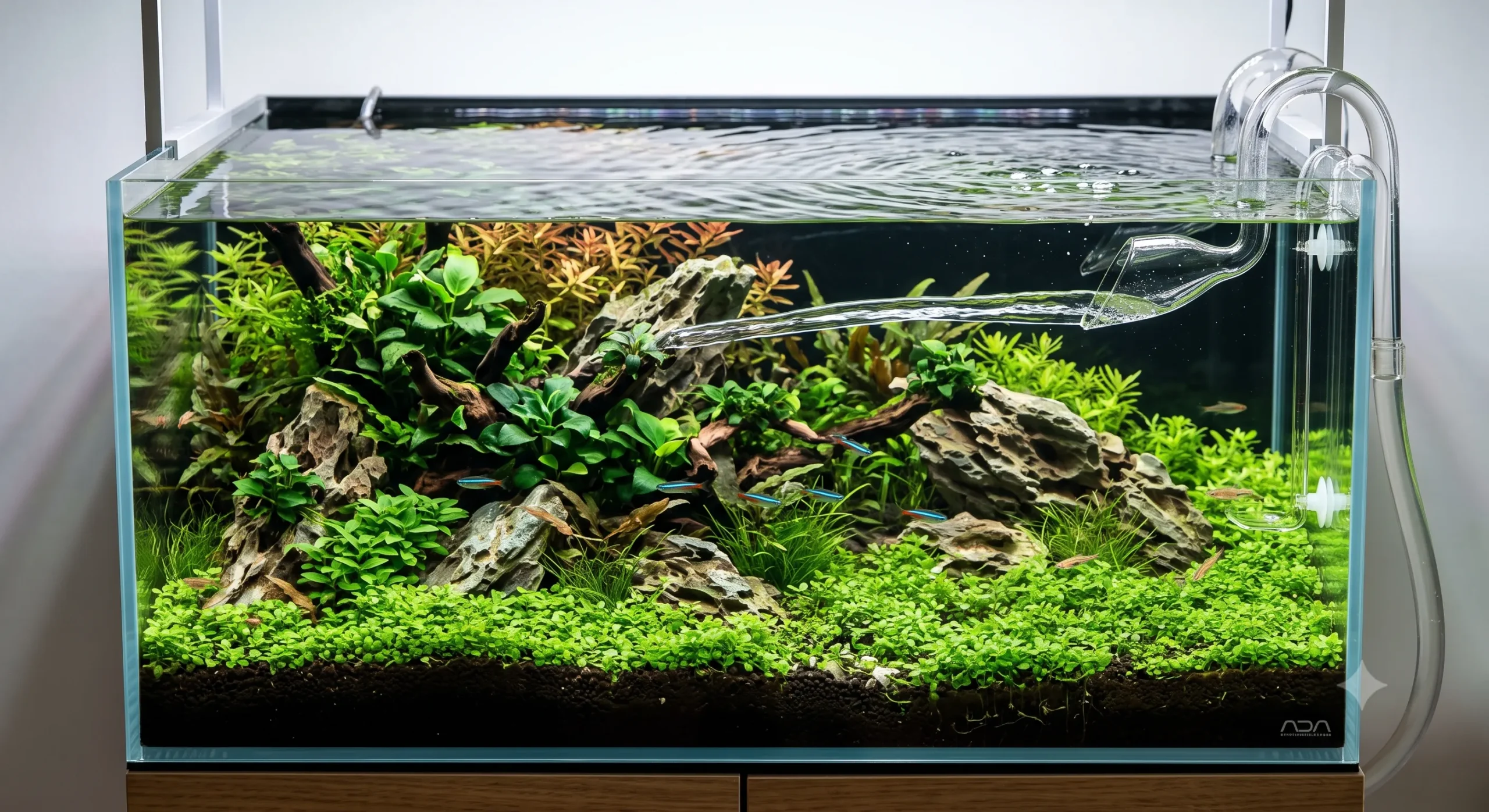
If you are transitioning from a traditional fish-only aquarium to a planted tank, you have to completely rewire how you think about water changes. The rules of the game are fundamentally different.
The Fish-Only Routine In a tank with fake plants, the nitrogen cycle ends with nitrates. Nitrates continuously build up from fish waste and uneaten food. The only way to remove them before they reach toxic levels is by physically removing water—typically a 25% to 50% water change every week.
The Planted Tank Advantage Live plants actively consume ammonia and nitrates as fertilizer. In a heavily planted, low-tech tank with a small number of fish, the plants might consume nitrates faster than the fish produce them. In these setups, you can often stretch water changes to once every three or four weeks!
Why Change Water at All? If the plants eat the nitrates, why do water changes in a planted tank?
- Replenishing Minerals: Plants consume micronutrients, calcium, and magnesium from the water column. Fresh tap water replenishes these essential trace elements.
- Resetting Nutrient Buildup: If you dose liquid fertilizers, the plants might not consume every single nutrient equally. A weekly 50% water change (especially in high-tech tanks) “resets” the water, ensuring nutrients don’t build up to toxic levels or trigger algae blooms.
Leave a Reply