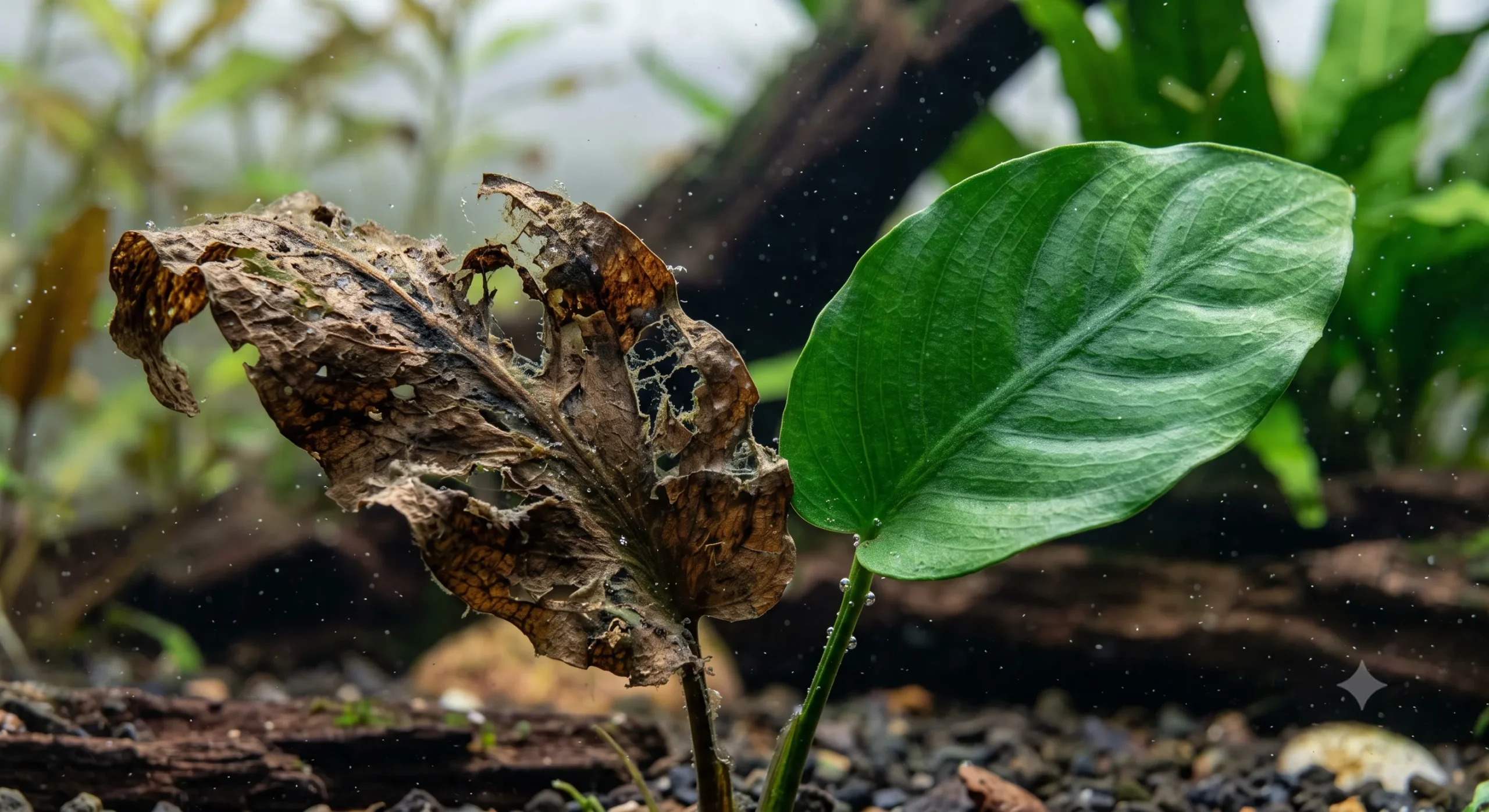
Aquatic plants are excellent communicators. When they lack specific nutrients or ideal conditions, their leaves change color and shape to show you exactly what is wrong. Here is how to translate their warning signs.
Yellowing Leaves (Chlorosis) If your leaves are turning yellow but the veins remain green, you are looking at a nutrient deficiency.
- Old Leaves Turning Yellow: This is a Nitrogen deficiency. Nitrogen is a “mobile” nutrient. When the plant is starving, it steals nitrogen from its older, lower leaves to protect the new growth at the tip.
- New Leaves Turning Yellow/Pale: This is an Iron deficiency. Iron is an “immobile” nutrient. The plant cannot move iron from old leaves to new ones, so the brand-new shoots grow in pale, yellow, or even white.
Brown, Melting, or Disintegrating Leaves
- New Tank Melt: If you just bought the plant, this is simply the transition from emersed (grown out of water) to submerged foliage. Siphon out the brown mush and wait for new growth.
- Pinholes in Leaves: If you see tiny brown dots that slowly open up into small holes across the leaves, this is a classic Potassium deficiency.
How to Fix It Diagnosing the issue is the hard part; fixing it is easy. If you spot these deficiencies, step up your dosing routine with a comprehensive, all-in-one liquid fertilizer, and ensure your plants are getting adequate light to metabolize those newly added nutrients.
Leave a Reply